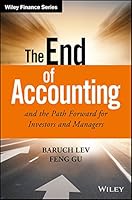
# The End of Accounting
**Baruch Lev and Feng Gu** | [[Numbers]]
---
> "Earnings once explained 90% of stock prices. Today, only 50%."
This isn't a minor statistical drift—it's a structural collapse. Financial statements, designed for the industrial age, no longer capture what creates value in the modern economy. Balance sheets obsess over factories and inventory (commodities available to anyone) whilst ignoring patents, brands, customer relationships, and knowledge capital (the actual sources of competitive advantage).
**The gap between reported numbers and economic reality is widening, not closing.** As companies shifted from physical to intangible assets, accounting didn't adapt. Worse, the rules actively distort reality: if you *build* a brand (Coca-Cola), it's not an asset. If you *buy* a brand, it magically appears on the balance sheet. The logic is broken.
> "If you develop a brand, like Coke did, it's not an asset by GAAP. But if you buy it, it will be proudly displayed on your balance sheet."
Lev and Gu's diagnosis: accounting is stuck in 1913. Their prescription: move beyond static statements toward strategic resource reporting—tracking the intangible investments and competitive advantages that actually drive value. Until then, investors and managers are flying blind.
---
## Core Ideas
### [[The Decline of Earnings Relevance]]
Earnings used to be the north star for investors. Not anymore.
In the 1950s, earnings explained around 90% of stock price movements. By the 1980s, that had dropped to 70%. Today, earnings explain only 50%.
The collapse has three causes. First, one-time items proliferate—restructuring charges, impairments, write-offs—making "recurring" earnings a fiction. Second, accrual manipulation through bad debt provisions, depreciation schedules, and stock option expensing distorts reported performance. Third, non-transactional events that matter (clinical trial results, strategic partnerships, key talent departures) don't appear in financials.
> "Nowadays, reported earnings are largely detached from reality and don't really matter much."
Investors increasingly ignore quarterly "beats" or "misses" because they know earnings are unreliable. The signal-to-noise ratio has collapsed.
### [[Cash Flows Beat Earnings]]
Lev and Gu's empirical finding: forecasting cash flows is simpler, more accurate, and yields higher investment returns than forecasting earnings.
Cash can't be manipulated—you either have it or you don't. It avoids accrual accounting distortions. It has a direct link to shareholder value: dividends, buybacks, reinvestment all require cash.
This echoes [[How Finance Works]]—finance people focus on cash flow statements because they're cleaner. Accounting profits are opinions; cash flow is fact.
### [[The Intangibles Problem]]
Since the 1980s, corporate value shifted from physical to intangible assets—but accounting didn't follow.
The distortion works like this. Internal development gets expensed: R&D, brand building, employee training are expensed immediately, reducing current profits. External acquisition gets capitalised: buy a company with intangibles and you capitalise them, increasing assets and inflating ROE.
This creates perverse consequences. Companies are incentivised to *buy* rather than *build* capabilities. Financial statements understate asset bases by missing intangibles. Profitability ratios (ROE, ROA) are overstated because the denominator (assets) is understated.
If Coca-Cola built its brand internally, it doesn't appear as an asset. If they acquired another beverage brand, suddenly it's proudly displayed on the balance sheet. The logic is backwards.
### [[Strategic Resources vs. Commodities]]
Not all assets create competitive advantage. Balance sheets track the wrong things.
Accounting measures commodities: factories, machinery, buildings, inventory, raw materials. These are available to all competitors and create no lasting edge.
> "Office buildings, production machinery, inventory—commodities available to all competitors—cannot create competitive advantage."
Accounting ignores strategic resources: patents, IP, proprietary technology, brands, customer relationships, talent, organisational capabilities, network effects, platforms.
True competitive advantage comes from resources that are valuable, rare, and difficult to imitate. Accounting systematically ignores them.
### [[Information Timeliness]]
Information is valuable when it's new and surprising. Accounting reports lag reality by weeks or months.
Stock prices move on real-time data: customer adoption metrics, same-store sales, policy renewals. By the time earnings are reported, the market has already priced in most of the information. Alternative data sources (app downloads, web traffic, satellite imagery) now matter more than quarterly reports.
Quarterly earnings calls are theatre. Real investors focus on leading indicators that precede financial results.
---
## Key Insights
**R&D and brand building are expensed, but they're investments**—they generate future returns. Treating them as expenses understates assets and overstates current costs. Lev and Gu propose capitalising intangibles and amortising them over their useful life.
**Small and mid-cap companies suffer most**—reduced analyst coverage leaves investors blind. Misstated profitability distorts capital allocation. Too much flows to mature companies, too little to growth. Investors rely on alternative data and proxies because financial statements are unreliable.
**Accounting standards haven't materially evolved in 110 years.** Regulators add complexity (new disclosure rules) without restoring relevance. Focus on preventing fraud (important) neglects the bigger problem: irrelevance.
**Strategic resource reporting should replace static statements.** Track intangible investments and their outcomes—patents filed, brands launched, customer acquisition. Report on competitive advantage indicators: pricing power, customer retention, talent quality. Create "momentum statements" showing pace of change, not just static snapshots.
This isn't more disclosure—it's *different* disclosure focused on forward-looking value drivers.
---
## Connects To
- [[How Finance Works]] - Both emphasise cash over earnings; both critique backward-looking accounting
- [[7 Powers]] - Strategic resources (intangibles) create [[Power]]; accounting doesn't capture them
- [[Better, Simpler Strategy]] - [[WTP]] and [[WTS]] come from intangibles (brands, capabilities), not commodities
- [[The Unaccountability Machine]] - Financial accounts are control models that can distort reality
- [[What the CEO Wants You to Know]] - Cash generation matters; accounting profits can mislead
---
## Final Thought
Financial statements no longer tell you what matters. The shift from industrial to knowledge economy broke accounting's core assumption—that value resides in tangible assets you can count and depreciate. In reality, value comes from intangibles: patents, brands, customer relationships, platforms.
The perverse irony: accounting rules actively distort resource allocation. If you *build* capabilities internally, they're expensed (punishing current earnings). If you *buy* them via acquisition, they're capitalised (inflating assets). This incentivises M&A over organic development—exactly backwards for sustainable competitive advantage.
The 40-point drop in earnings relevance isn't noise; it's signal. The market is telling us earnings don't work anymore. Investors have moved on—they focus on alternative data, leading indicators, and strategic metrics that precede financial results. Only accounting standards haven't caught up.
Don't confuse precision with accuracy. Financial statements are precise to the penny but increasingly inaccurate about what creates value. If you're managing or investing based solely on reported earnings, you're navigating by an obsolete map.
Look forward, not backward. Track intangible investments and strategic resources. Focus on cash flows, not accrual earnings. The numbers that matter aren't on the income statement—they're in the competitive dynamics accounting doesn't measure.