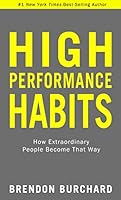
# High Performance Habits
**Brendon Burchard** | [[Action]]
---
> "Excellence is an art won by training and habituation. We do not act rightly because we have virtue or excellence, but we rather have those because we have acted rightly. We are what we repeatedly do. Excellence, then, is not an act but a habit." — Aristotle
High performance isn't about motivation, talent, or lucky breaks. It's about raising the stakes until excellence becomes non-negotiable. **Necessity is the emotional drive that makes great performance a must instead of a preference.** When you have high necessity, you feel a deep emotional drive and commitment to succeeding that consistently forces you to work hard, stay disciplined, and push yourself. Not because you're inspired. Because you must.
Brendon Burchard's research identifies six habits—the HP6—that distinguish high performers from everyone else. Not personality traits. Not innate abilities. Habits: clarity, energy, necessity, productivity, influence, and courage. These are teachable, trainable, and within your control. Practice these consistently, and you'll exceed standard norms over the long term. Skip them, and even great talent plateaus.
High performers don't just have high standards—they check in several times daily to see whether they're living up to them. They affirm their goals publicly, creating social consequence and obligation. They generate the feelings they want more often than taking the emotions that land on them. Excellence is a practice, not a gift.
---
## Core Ideas
### [[The HP6]]
Six habits distinguish high performers. Each is learnable and within your control.
**Seek Clarity** on who you want to be, how you want to interact with others, what you want, and what will bring meaning. High performers are clear on their intentions across four domains—self (identity and aspirations), social (how they treat others), skills (primary field of interest), and service (how to add value).
**Generate Energy** through mental, emotional, and physical vibrancy sustained through transitions and rituals. The easiest, fastest way to increase energy is to master transitions—use brief rituals to reset focus and energy between activities.
**Raise Necessity** to make performance a must, not a preference. Tie it to identity, values, and duty. High performers don't keep their goals secret or silent. They confidently affirm their goals to themselves and others, creating social stakes.
**Increase Productivity** through focused effort on the right things. For every major goal, identify your Five Moves—the essential steps that ensure progress. If you don't know the moves, you lose. High performers aren't scattershot learners; they've homed in on their primary field of interest and set up routines to develop skill.
**Develop Influence** by shaping how others think, feel, and act. Ask a tremendous number of questions that elicit what they think, feel, want, need, and aspire to. Remember: people support what they create. Give trust, autonomy, and decision-making authority.
**Demonstrate Courage** by acting in spite of fear, pursuing authentic or growth-oriented goals even under risk. High performers report taking action despite fear much more than others do.
### [[Necessity]]
Necessity is the emotional drive that makes great performance a must instead of a preference. When you have high necessity, you strongly agree with this statement: "I feel a deep emotional drive and commitment to succeeding, and it consistently forces me to work hard, stay disciplined, and push myself."
Necessity is created when high personal standards meet obsessions. The moment something transcends being a passion and becomes an obsession is when it gets tied to your identity. When high personal standards meet high obsessions, high necessity emerges. So, too, does high performance.
Duty amplifies necessity. Sometimes duty means owing something to others or being accountable for performance. Sometimes it means meeting another's expectations or needs. Sometimes it means complying with group norms or values, or following a moral sense of right and wrong. If you owe it to someone to do well, and doing well will exhibit your expertise, you'll feel greater necessity to perform at higher levels.
> "If you're not going to monitor your progress, you may as well not set a goal or expect to live up to your own standards."
Public affirmation creates necessity. It's in affirming whys with other people that high performers not only feel more confident but create social consequence and obligation. If you tell someone you're going for a goal and why it's important, your ego is on the line. There are social stakes. When we verbalise something, it becomes more real and important to us.
### [[Progressive Mastery]]
The path to skill development follows ten steps. Determine a skill you want to master. Set specific stretch goals on your path to developing that skill. Attach high levels of emotion and meaning to your journey and results. Identify the factors critical to success, and develop your strengths in those areas—fix your weaknesses with equal fervour.
Develop visualisations that clearly imagine what success and failure look like. Schedule challenging practices developed by experts or through careful thought. Measure your progress and get outside feedback. Socialise your learning by practicing or competing with others. Continue setting higher-level goals so that you keep improving. Teach others what you're learning.
---
## Key Insights
**Having a clear plan is as important as motivation and willpower.** It helps you see past distractions and inoculates you against negative moods. The more clarity you have, the more likely you are to get stuff done even on days you feel lazy or tired. Choosing stretch goals in each area of your life makes a good starting place for high performance.
**Before entering any performance situation, high performers contemplate how they want to feel regardless of what emotions might come up.** They envision how they want to feel leaving the situation regardless of what emotions might come up. High performers are generating the feelings they want more often than taking the emotions that land on them. They don't wait for motivation to strike. They create the emotional state that serves them.
> "I share this here because it's so thoroughly obvious that high performers are generating the feelings they want more often than taking the emotions that land on them."
**If three aspirational words sum you up at your best, what would they be?** Once you find your words, put them in your phone as an alarm label that goes off several times per day. High performers are intentional about who they want to become. They have vision beyond current circumstances. They imagine their best future self and start acting like that person today.
**High performers give extraordinary thought to questions of service.** How to add value, inspire those around them, and make a difference. Their attention could best be described as a search for relevance, differentiation, and excellence. They're consistently wondering how they want those they love and serve to remember them.
**Reconnecting with your passion and setting up structure to develop more skills related to it is a game changer.** High performers aren't scattershot learners. They've homed in on their primary field of interest and set up activities or routines to develop skill in those areas. Look to the future. Identify key skills. Obsessively develop those skills.
**People who set goals and regularly self-monitor are almost 2.5 times more likely to attain their goals.** In every discussion with high performers, they're willing to face their faults and address their weaknesses. They don't avoid the conversation. They don't pretend to be perfect. At their core, their identity and enjoyment in life are tied to growth.
**Satisfaction is not the cause of great performance; it's the result.** When we do what aligns with our future identity, we are more driven and likely to do a great job. This challenges conventional wisdom about finding satisfaction first.
**If your job requires you to learn fast, deal with stress, be alert, remember important things, and keep a positive mood, then you must take exercise more seriously.** Energy means the full spectrum of mental, emotional, and physical vibrancy. Exercise isn't optional for high performance.
**If you seek greater influence with other people, learn to ask a tremendous number of questions.** Ask what they think, feel, want, need, and aspire to. When people get to contribute ideas, they have mental skin in the game. They want to back the ideas they helped shape. People support what they create.
**In organisational settings, the greatest thing you can give is trust, autonomy, and decision-making authority.** Researchers call this giving someone "authorship," meaning they get to choose what to work on or how to get things done. High performers always communicate how their people should be thinking about themselves, about their competitors, and about the overall marketplace.
> "You are capable of remarkable things that you could never foretell and will never discover without taking action."
**No one who achieved greatness avoided struggle.** They met it, engaged with it. They knew that it was necessary, because they knew that real challenge and hardship pushed them, extended their capabilities, made them rise. No one can quiet you without your permission. No one can minimise your self-image but you. And no one can open you up and release your full power but you.
**Make it a daily practice to share your thoughts, goals, and feelings with others.** This isn't about getting approval—it's about making your intentions real and creating accountability. The most important thing in connecting authentically with others is to share your true desires with them. Every day, share something with someone about what you really think and want in life.
---
## Connects To
- [[Ego Is The Enemy]] - Ryan Holiday on humility and purpose pairs with Burchard on necessity and growth
- [[Nine Lies About Work]] - Buckingham & Goodall on strengths and attention complements Burchard on mastery and energy
- [[Playing to Win]] - Lafley & Martin on making hard choices connects to Burchard on clarity and necessity
- [[Requisite Organization]] - Elliott Jaques on aligning capability to work pairs with Burchard on skill development
---
## Final Thought
High performance is a system of habits you can install. Clarity about who you want to be. Energy sustained through rituals and transitions. Necessity raised by tying goals to identity and duty. Productivity focused on the Five Moves. Influence built through questions and authorship. Courage practised despite fear. Install these habits, and high performance becomes predictable. Skip them, and even great talent stalls.
Necessity is the emotional drive that separates high performers from everyone else. It's not enough to want something or think it would be nice. You have to make it a must. Tie it to your identity. Make it public, creating social obligation. Frame it as a duty to others. Monitor your progress obsessively. When performance becomes non-negotiable, you find a way. When it's just a preference, you find an excuse.
Clarity across the Future Four matters because high performers aren't just clear about their goals. They're clear about who they want to be (self), how they want to treat others (social), what skills they're developing (skills), and how they're serving others (service). This creates a multi-dimensional identity that's harder to abandon than a single goal. If you only have a revenue target, you'll quit when it gets hard. If you've defined yourself as someone who shows up with energy, treats people with respect, masters your craft, and serves others—you keep going, because quitting means violating your identity.
High performers generate feelings; they don't wait for them. Before key situations, they decide how they want to feel—confident, energised, focused—and they generate those feelings through mental rehearsal, physiology, and intention. They don't wait for motivation to strike. They don't hope inspiration shows up. They create the emotional state that serves them. Feelings are not things that happen to you, but things you can generate within you.
These habits don't work if you do them occasionally. Clarity requires daily check-ins. Energy requires managing transitions throughout the day. Necessity requires constant monitoring. Productivity requires identifying Five Moves and tracking them. Influence requires asking questions and giving authorship repeatedly. Courage requires acting despite fear, over and over. The HP6 are a system. Practise them daily, and you become a high performer. Practise them sporadically, and they're just good ideas.